Introduction
The living room is often the heart of a home. It is where family members relax, guests gather, conversations take place, and everyday activities happen. Because the room serves so many purposes, its design should balance comfort, appearance, and functionality.
You do not need a complete renovation to improve your living room. Simple changes such as rearranging furniture, improving lighting, adding storage, refreshing the walls, and reducing clutter can make the space feel completely different.
The best living room improvement ideas focus on how the room is actually used. A beautiful living room should also provide comfortable seating, clear walking paths, practical storage, and suitable lighting.
Whether you have a large open-plan room or a small apartment living room, the following ideas can help you create a more welcoming space.
1. Start With the Living Room Layout
Before buying new furniture, look at the existing layout.
Ask yourself:
- Is there enough space to walk comfortably?
- Can people easily talk to one another?
- Is the television positioned appropriately?
- Is natural light being blocked?
- Are frequently used items easy to reach?
A good layout can improve a room without requiring any new furniture.
2. Choose the Right Sofa
The sofa is usually the main piece of furniture in a living room.
Choose a sofa based on:
- Room size
- Household needs
- Comfort
- Maintenance
- Existing décor
- Available walking space
Measure the room and doorways before purchasing a large sofa.
3. Create a Conversation Area
Arrange seating so people can comfortably interact.
Depending on the room, you might use:
- Sofa and two chairs
- Sectional sofa
- Sofa and loveseat
- Two facing sofas
- Compact chairs around a coffee table
Avoid placing all furniture against the walls simply because there is more empty space in the center.
4. Improve Living Room Lighting
Lighting can dramatically change the atmosphere of a living room.
Use a combination of:
- Ceiling lights
- Floor lamps
- Table lamps
- Wall sconces
- Accent lighting
Use brighter lighting for activities and softer lighting for relaxation.
5. Make Better Use of Natural Light
Natural light can make a living room feel brighter and more spacious.
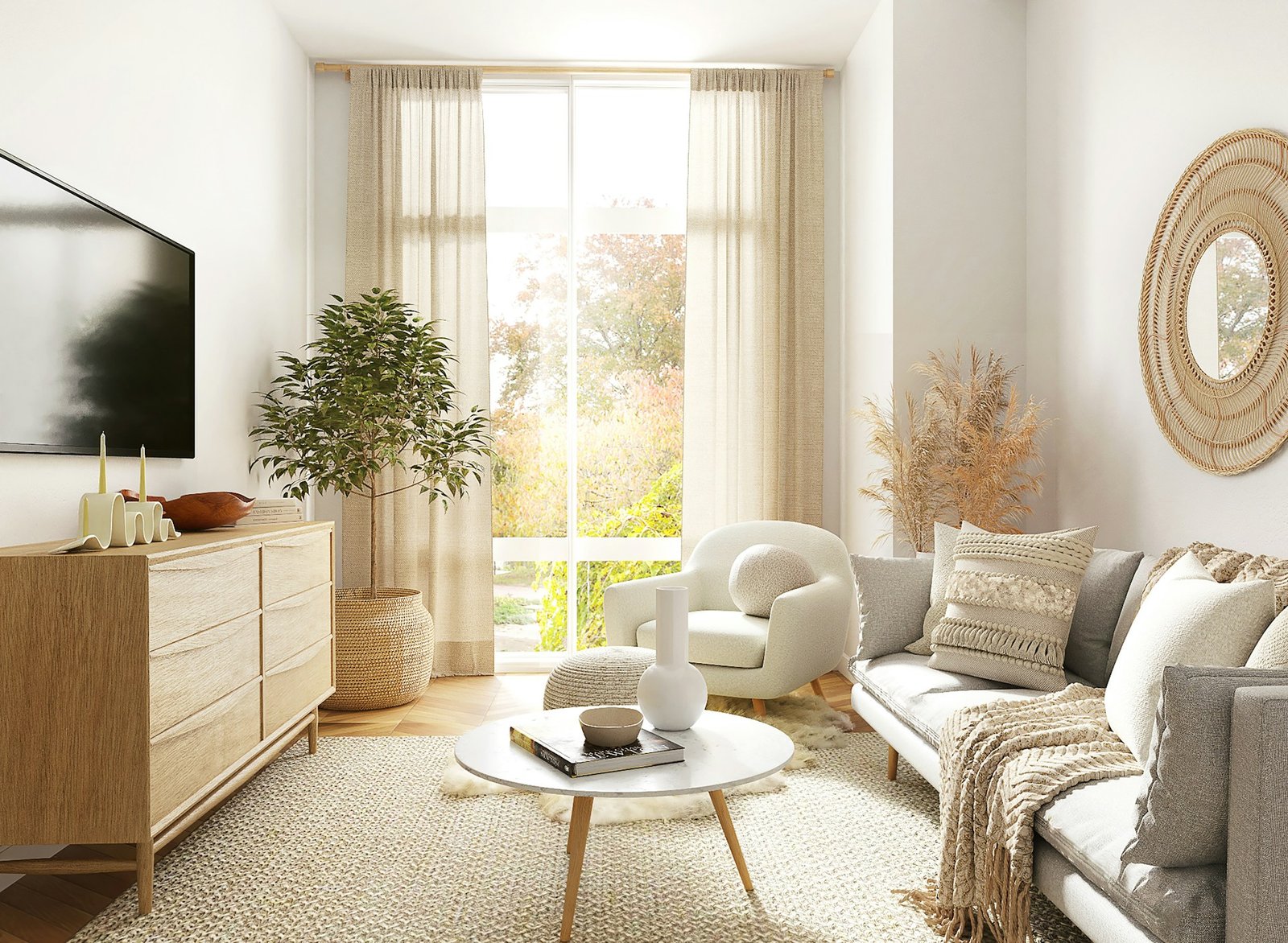
Keep windows relatively clear and choose suitable curtains or blinds that provide privacy without unnecessarily blocking daylight.
Arrange furniture so it does not obstruct the main window area.
6. Add an Area Rug
An area rug can help define a seating area and add warmth.
Choose a rug that is large enough to visually connect the furniture.
Consider:
- Room dimensions
- Furniture placement
- Cleaning requirements
- Household traffic
- Material durability
Avoid placing rugs where they create unsafe trip hazards.
7. Choose a Coordinated Color Palette
Color plays an important role in the atmosphere of a living room.
Popular neutral colors include:
- White
- Beige
- Cream
- Gray
- Taupe
Add personality with accent colors through:
- Cushions
- Curtains
- Artwork
- Rugs
- Decorative objects
A consistent palette can make the room feel more organized.
8. Create an Accent Wall
An accent wall can add character without changing the entire room.
Options include:
- Paint
- Wallpaper
- Wood paneling
- Decorative wall treatments
The wall behind the sofa or television can work as a focal point, depending on the layout.
9. Improve Living Room Storage
Storage can help keep the room organized.
Consider:
- Built-in cabinets
- Floating shelves
- Storage ottomans
- Media units
- Baskets
- Bookcases
Choose storage based on what you actually need to store.
10. Use Multifunctional Furniture
Multifunctional furniture can be particularly helpful in smaller living rooms.
Examples include:
- Storage ottomans
- Coffee tables with storage
- Sofa beds
- Storage benches
- Nesting tables
These pieces can provide additional functionality without requiring extra floor space.
11. Declutter the Living Room
One of the easiest living room improvements costs nothing.
Remove items that are:
- Broken
- Unused
- Duplicated
- Outdated
- Taking up unnecessary space
Keep frequently used items accessible and store everything else appropriately.
12. Improve the TV Area
The television area can easily become visually cluttered.
Organize:
- Cables
- Remote controls
- Gaming equipment
- Streaming devices
- Speakers
A suitable media console can hide cables and provide additional storage.
Make sure the television is positioned at a comfortable height and viewing distance.
13. Add Indoor Plants
Plants can bring natural color and texture into a living room.
Choose plants according to:
- Available sunlight
- Room conditions
- Maintenance requirements
- Available space
Place plants where they do not obstruct walkways.
14. Add Artwork
Artwork can personalize a living room.
Consider:
- Large artwork
- Gallery walls
- Photography
- Decorative prints
- Sculptural pieces
Choose artwork that complements your furniture and color palette.
Avoid filling every wall.
15. Upgrade Curtains
Curtains can influence the appearance and comfort of a room.
Consider:
- Fabric
- Length
- Color
- Privacy
- Light control
Hanging curtains appropriately can create a more finished appearance.
16. Improve the Coffee Table
A coffee table should be practical as well as attractive.
Choose a size that allows comfortable movement around it.
You can decorate it with:
- Books
- Tray
- Small plant
- Decorative bowl
Keep enough surface space available for everyday use.
17. Create a Reading Corner
An unused corner can become a comfortable reading area.
Add:
- Comfortable chair
- Small side table
- Reading lamp
- Small bookshelf
This can create a dedicated relaxing space without changing the entire room.
18. Make a Small Living Room Feel Larger
Small rooms benefit from careful furniture selection.
Try:
- Compact furniture
- Light colors
- Mirrors
- Floating shelves
- Furniture with visible legs
- Clear walking paths
- Better lighting
Avoid oversized sofas and excessive decoration.
19. Use Mirrors Strategically
A mirror can reflect light and create a sense of depth.
Consider placing one where it reflects:
- Natural light
- A pleasant view
- An attractive architectural feature
Do not use mirrors simply to fill empty walls.
20. Create Zones in an Open-Plan Room
Open-plan living areas often need different functional zones.
You can create separate areas for:
- Seating
- Dining
- Reading
- Work
- Entertainment
Use furniture placement, rugs, lighting, or open shelving to visually separate zones without completely closing the space.
21. Add Better Entertainment Storage
If your household uses multiple electronic devices, create dedicated storage.
Use:
- Media cabinets
- Shelves
- Cable organizers
- Storage boxes
Keep ventilation requirements in mind for electronic equipment.
22. Improve Comfort With Textiles
Soft furnishings can make a living room more comfortable.
Consider:
- Cushions
- Throws
- Curtains
- Rugs
- Upholstered furniture
Choose materials according to household use and cleaning needs.
23. Upgrade Small Details
Small changes can have a surprisingly large effect.
Consider updating:
- Lamp shades
- Cabinet handles
- Cushions
- Decorative trays
- Plant pots
- Picture frames
Coordinate finishes rather than mixing too many unrelated styles.
24. Improve the Entry to the Living Room
If the living room connects directly to the home’s entrance, keep the transition organized.
Use suitable:
- Storage
- Lighting
- Rugs
- Decorative furniture
Avoid creating an obstacle in the main walking route.
25. Make the Living Room Family-Friendly
If children use the living room, prioritize practical materials and safe layouts.
Consider:
- Durable upholstery
- Rounded furniture edges where appropriate
- Storage baskets
- Clear walking paths
- Washable textiles
Secure unstable furniture where necessary.
26. Create a Relaxing Atmosphere
A relaxing living room does not need complicated décor.
Focus on:
- Comfortable seating
- Soft lighting
- Calm colors
- Natural materials
- Reduced clutter
- Suitable textiles
A simple design can often feel more peaceful than a heavily decorated room.
27. Use Natural Materials
Natural textures can add warmth.
Consider:
- Wood
- Stone
- Woven baskets
- Cotton
- Linen
- Natural-finish accessories
Combine textures rather than using too many decorative objects.
28. Improve Airflow
Furniture should not unnecessarily block heating, cooling, or ventilation outlets.
Keep air vents accessible and maintain HVAC equipment according to manufacturer recommendations.
If the room has persistent temperature or ventilation problems, professional assessment may be appropriate.
29. Plan a Budget-Friendly Living Room Makeover
You can improve the room without buying everything new.
Try:
- Rearranging furniture
- Decluttering
- Changing cushions
- Adding plants
- Updating artwork
- Improving lighting
- Repainting walls
- Changing curtains
Start with improvements that provide the greatest practical benefit.
30. Choose Long-Term Design Over Trends
Trends can be attractive, but they change quickly.
Choose major furniture pieces based on:
- Comfort
- Quality
- Size
- Functionality
- Durability
Use smaller accessories to experiment with current trends.
Living Room Improvement Checklist
| Improvement | Main Benefit |
|---|---|
| Furniture rearrangement | Better layout |
| New sofa | Comfort |
| Area rug | Defines seating area |
| Layered lighting | Better atmosphere |
| Storage furniture | Less clutter |
| Mirrors | Sense of depth |
| Plants | Natural character |
| Artwork | Personal style |
| Curtains | Privacy and appearance |
| Multifunctional furniture | Better space usage |
Common Living Room Mistakes
Avoid:
- Buying furniture without measuring
- Blocking windows
- Overcrowding the room
- Poor lighting
- Too many decorative objects
- Ignoring storage
- Creating narrow walking paths
- Choosing furniture based only on appearance
Always consider how the room will be used every day.
Frequently Asked Questions
How can I improve my living room without renovating?
Rearrange furniture, declutter, improve lighting, add an area rug, update cushions and curtains, introduce plants, and refresh the walls.
How can I make a small living room look bigger?
Use appropriately sized furniture, light colors, mirrors, vertical storage, clear pathways, and good lighting.
What is the most important living room furniture?
The sofa is usually the main piece, but the best furniture depends on the room’s size, layout, and household needs.
How can I make my living room more modern?
Use a simple color palette, contemporary lighting, clean-lined furniture, organized storage, natural textures, and carefully selected décor.
How can I improve living room storage?
Consider built-in cabinets, bookcases, floating shelves, media units, storage ottomans, and multifunctional furniture.
How can I make my living room more comfortable?
Choose comfortable seating, add suitable rugs and cushions, improve lighting, control clutter, and arrange furniture to support conversation and relaxation.
Conclusion
The best living room improvement ideas combine comfort, functionality, organization, and personal style. You do not need a major renovation to transform the room.
Start with the layout and remove unnecessary clutter. Then improve lighting, storage, seating, colors, textiles, and décor according to your needs.
By making thoughtful changes rather than simply following trends, you can create a living room that looks attractive while remaining comfortable and practical for everyday life.