
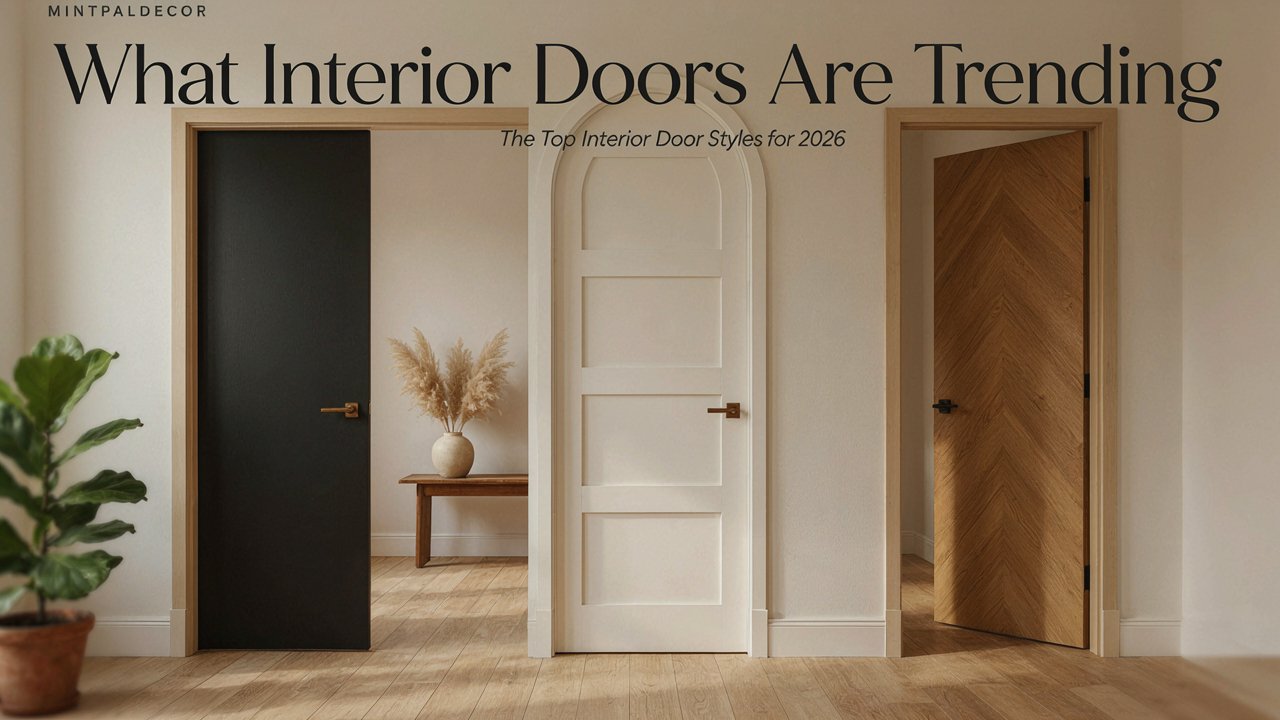
Introduction
Interior doors are an important part of a home’s design. They provide privacy and separate rooms, but they can also influence the overall style, light, and sense of space.
Homeowners updating their interiors are increasingly looking beyond basic white panel doors. Current design ideas include natural wood finishes, minimalist flush doors, glass details, Shaker-style doors, sliding systems, and taller designs.
So, what interior doors are trending mintpaldecor in 2026? The answer depends on the home’s architecture, room size, budget, and personal style. The most useful approach is to understand the major design directions and then choose a door that works with the rest of the interior.
1. Minimalist Flush Doors
Flush doors have a simple, flat appearance with limited decorative detailing.
Their clean surface works particularly well with modern and contemporary interiors. Because the design is visually simple, flush doors can blend into a wall or become part of a minimalist room scheme.
They are a practical choice for homeowners who prefer:
- Clean lines
- Simple surfaces
- Modern interiors
- Minimal decoration
- A visually uncluttered appearance
Matching the door and wall colors can create an especially streamlined look.
2. Natural Wood Interior Doors
Natural wood continues to be a popular design choice because it adds warmth and texture to an interior.
Wood doors can work with contemporary, traditional, Scandinavian, rustic, and transitional spaces. Different species, stains, grains, and finishes create very different appearances.
When choosing a wood door, consider the existing:
- Flooring
- Furniture
- Cabinetry
- Wall colors
- Wood finishes
The goal is not necessarily to make every wood element identical. Instead, choose finishes that complement one another.
3. Shaker-Style Doors
Shaker doors feature a simple framed-panel design and have remained popular because they can work across several interior styles.
Their straightforward appearance makes them suitable for bedrooms, bathrooms, hallways, kitchens, and other areas.
Shaker doors can be painted in neutral shades or stronger colors depending on the overall design.
For homeowners who want something more detailed than a completely flat door without choosing an elaborate traditional design, Shaker styling provides a balanced option.
4. Glass Interior Doors
Glass can make an interior feel more connected by allowing natural light to pass between spaces. These doors work particularly well in areas where you want openness without completely removing separation. Common applications include:
- Home offices
- Dining rooms
- Living areas
- Hallways
- Kitchens
Clear glass provides strong visual connection, while textured or patterned glass can offer greater privacy.
Reeded and Fluted Glass
Reeded or fluted glass has textured vertical lines that soften visibility while allowing light through. It can add a decorative feature without making a room feel completely closed off.
For spaces where privacy is important, choose a glass type that provides the appropriate level of visual screening.
5. Full-Height Interior Doors
Taller doors can create a stronger architectural presence.
Full-height designs extend closer to the ceiling than standard interior doors and can emphasize vertical proportions.
They can work particularly well in:
- Modern apartments
- Contemporary homes
- Minimalist interiors
- Rooms with high ceilings
Before choosing this style, check ceiling height, structural requirements, door hardware, and installation conditions.
Highlight: Choose the Door for the Room
A trending door is not automatically the right door for every space.
A glass door may work well for a home office where natural light is valuable, while a solid door may be more suitable for a bedroom where privacy is the priority.
The best interior door combines the desired appearance with the practical requirements of the room.
6. Sliding Interior Doors
Sliding doors are useful where traditional hinged doors require too much swing space.
They can be used for:
- Bedrooms
- Home offices
- Pantries
- Bathrooms
- Closets
- Open-plan areas
Barn-style sliding doors can create a distinctive decorative feature, while more concealed sliding systems can provide a minimalist appearance.
The wall and hardware need to be suitable for the selected sliding system.
7. Pocket Doors
Pocket doors slide into a wall cavity when opened.
This can help save usable floor space because there is no traditional door swing.
Pocket doors can be useful in compact areas such as:
- Small bathrooms
- Laundry rooms
- Home offices
- Walk-in closets
- Compact bedrooms
Installation can be more involved than replacing a conventional hinged door because the wall needs to accommodate the pocket mechanism.
8. Arched Interior Doors
Arched doors introduce softer architectural lines compared with conventional rectangular openings.
They can complement:
- Mediterranean-inspired interiors
- Traditional homes
- Organic modern designs
- Transitional spaces
An arched opening can become a strong architectural feature, so the surrounding design should be kept coordinated rather than overly busy.
9. Dark and Bold Door Finishes
While white and neutral doors remain versatile, darker finishes can create stronger visual contrast.
Black, charcoal, deep brown, and other darker finishes may be used to make a door stand out.
Bold colors can also work when they complement the room’s existing palette.
Before selecting a dramatic finish, consider whether the door should act as a focal point or blend into the surrounding architecture.
10. Concealed and Wall-Matching Doors
Minimalist interiors sometimes use doors designed to visually blend with the wall.
A door can be painted or finished in a similar color to the surrounding surface, reducing its visual impact.
This approach can work well in modern interiors where clean architectural lines are important.
Matching trim and hardware carefully can help maintain the intended appearance.
Interior Door Trends at a Glance
| Door Style | Main Feature | Suitable For |
|---|---|---|
| Flush | Clean and minimal | Modern interiors |
| Natural wood | Warmth and texture | Many design styles |
| Shaker | Simple panel detail | Traditional and transitional homes |
| Glass | Light and openness | Offices and living areas |
| Reeded glass | Light with more privacy | Modern interiors |
| Sliding | Space saving | Compact and open-plan areas |
| Hidden sliding system | Small rooms | |
| Full-height | Strong vertical appearance | Modern homes |
| Arched | Soft architectural shape | Traditional and organic styles |
| Bold finish | Visual contrast | Feature doors |
How to Choose a Trending Interior Door
Trends are useful for inspiration, but several practical factors should guide the final decision.
Consider Privacy
Bedrooms and bathrooms usually require more privacy than living spaces or home offices.
Check Available Space
A hinged door needs room to swing. Sliding or pocket doors may be more suitable when floor space is limited.
Match the Interior Style
Look at flooring, furniture, cabinets, wall colors, and architectural details before selecting the door.
Think About Maintenance
High-traffic doors may benefit from durable, easy-to-clean finishes.
Consider Hardware
Handles, hinges, tracks, and other hardware can influence the overall appearance. Select hardware that works with both the door and the room.
Measure Before Ordering
Check the opening width, height, wall thickness where relevant, frame requirements, and surrounding space.
Common Interior Door Mistakes
Choosing Only Based on Appearance
A beautiful door may still be unsuitable if it does not provide enough privacy or space.
Ignoring the Existing Architecture
The door should complement the home’s overall design rather than look disconnected from it.
Using Too Many Different Styles
Mixing several door styles throughout one home can sometimes create a visually inconsistent result. A coordinated approach usually feels more intentional.
Forgetting Hardware
Door handles and other hardware are visible design elements and should not be treated as an afterthought.
Skipping Professional Installation When Needed
Complex pocket doors, large glass doors, structural modifications, and unusual openings may require appropriate professional installation.
Frequently Asked Questions
What interior doors are trending in 2026?
Current interior design directions include minimalist flush doors, natural wood, Shaker-style doors, glass and reeded-glass designs, sliding and pocket doors, full-height doors, and selected architectural styles such as arched openings.
Are wood interior doors still popular?
Yes. Natural wood provides warmth, texture, and visual character and can work with many different interior styles.
Are glass doors suitable for bedrooms?
They can be used, but privacy should be considered carefully. Frosted, textured, or reeded glass can provide more privacy than clear glass.
Are pocket doors a good choice for small rooms?
Pocket doors can be useful in compact rooms because they slide into the wall rather than requiring a traditional swing area. Installation requirements should be checked before choosing one.
Should all interior doors in a house match?
They do not necessarily need to be identical, but using a consistent design language, finish, or hardware style can help create a coordinated interior.
What is the most important factor when choosing an interior door?
Consider the room’s purpose first. Privacy, available space, durability, light, accessibility, and overall design should all be considered alongside appearance.
Conclusion
The answer to what interior doors are trending mintpaldecor includes several different design directions rather than one single style. Minimalist flush doors, natural wood, Shaker designs, glass, reeded glass, sliding doors, pocket doors, full-height options, and architectural shapes can all provide different benefits.
The right choice depends on the room, existing architecture, privacy requirements, available space, and personal design preferences.
Rather than selecting a door simply because it is currently popular, choose a style that improves the way the room functions and complements the rest of your home’s interior. That approach can keep the design attractive while making the upgrade practical for everyday living.