Soffits and fascia play an important role in protecting a home’s roofline and exterior. Although these components may not receive as much attention as the roof or siding, damaged soffits and fascia can allow moisture, pests, and debris to reach areas where they can cause expensive problems.
Knowing when you need soffit and fascia repair can help you address small issues before they develop into larger structural or moisture-related concerns. With regular inspections and timely repairs, homeowners can protect the roof edge, improve ventilation, and maintain the appearance of their property.
What Are Soffits and Fascia?
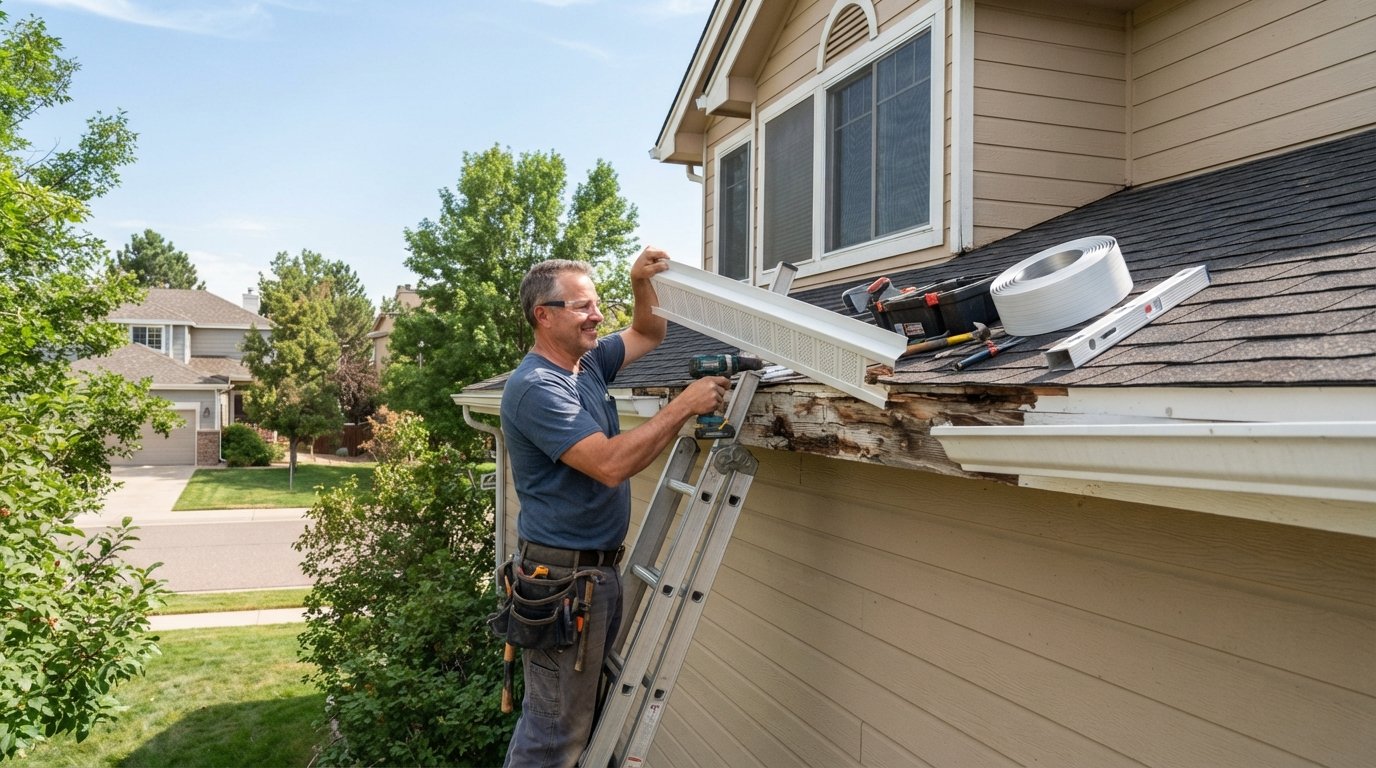
Soffits are the panels installed underneath the roof overhang. They help cover the underside of the roof edge and often contain ventilation openings that allow air to circulate through the attic.
Fascia is the vertical board or trim located along the lower edge of the roof. It provides a finished appearance and can also support components such as gutters.
Although soffits and fascia have different functions, they work together as part of the home’s roofline. Damage to one component can sometimes affect the other.
Common Signs That Soffits Need Repair
Soffit problems are not always obvious from the ground. However, several warning signs may indicate that repairs are necessary.
Look for:
- Cracked or broken soffit panels
- Sagging sections
- Holes or gaps
- Water stains
- Peeling or bubbling paint
- Mold or mildew
- Evidence of insects or birds
- Blocked ventilation openings
- Rotting wood
Poor attic ventilation can also contribute to moisture buildup and may affect the condition of the soffit system.
Signs of Damaged Fascia
Fascia boards are exposed to rain, snow, wind, sunlight, and moisture, so they can deteriorate over time.
Common signs of fascia damage include:
- Soft or rotten wood
- Cracks or splits
- Peeling paint
- Discoloration
- Loose sections
- Visible water damage
- Gaps around the roof edge
- Gutters pulling away from the fascia
If gutters become loose because the supporting fascia has deteriorated, the problem should be addressed promptly.
What Causes Soffit and Fascia Damage?
Several issues can contribute to soffit and fascia deterioration.
Water and Moisture
Water is one of the most common causes of exterior wood damage. Leaking gutters, damaged roofing materials, clogged drainage systems, and poor flashing can allow water to reach the roofline.
Repeated moisture exposure can eventually cause wood to soften and rot.
Poor Ventilation
Soffits often provide important attic ventilation. When ventilation openings become blocked by dirt, insulation, or debris, airflow can become restricted.
Poor ventilation may contribute to excess moisture and condensation in the attic.
Pests and Animals
Birds, insects, squirrels, and other animals may enter damaged soffits or create openings along the roofline.
Small holes can become larger over time, especially if animals repeatedly use the same area.
Age and Weather
Exterior materials naturally deteriorate with age. Strong sunlight, heavy rain, temperature changes, wind, and freezing conditions can gradually weaken soffit and fascia materials.
Regular inspections can help homeowners identify deterioration before major repairs become necessary.
How Soffit and Fascia Repair Works
The repair process depends on the material and extent of the damage.
A typical repair may involve several steps.
1. Inspect the Damage
The first step is identifying the source and extent of the problem. A damaged section may be caused by a gutter leak, roof issue, moisture problem, or simple material deterioration.
2. Remove Damaged Material
Severely damaged soffit or fascia sections may need to be removed. Care should be taken to avoid damaging nearby roofing, siding, gutters, or structural components.
3. Address the Underlying Problem
Replacing the visible damaged section without fixing the cause may result in the same problem returning.
For example, if water damage comes from a leaking gutter, the gutter or drainage problem should also be corrected.
4. Install Replacement Material
The replacement section should match the existing material as closely as possible. Common options include wood, aluminum, and vinyl.
5. Seal and Finish the Repair
Depending on the material, the repaired area may need sealing, painting, caulking, or other finishing work to protect it from moisture.
Can You Repair Soffits and Fascia Yourself?
Some minor repairs may be suitable for experienced homeowners, particularly when the damage is limited and easily accessible.
However, roofline work can involve ladders, heights, sharp materials, and hidden structural damage. Homeowners should use appropriate safety equipment and avoid working in unsafe weather conditions.
If the damage extends into the roof structure or involves extensive rot, professional assessment is usually the safer option.
Repair or Replace: Which Is Better?
The right choice depends on the condition of the material.
Repair may make sense when:
- Damage is limited to a small area
- The surrounding material remains strong
- The problem has not affected the structure
- The cause of the damage can be corrected
Replacement may be more appropriate when:
- Large sections are rotten
- Damage repeatedly returns
- Materials are severely deteriorated
- Multiple sections require repair
- Structural components have been affected
A professional inspection can help determine whether localized repair or broader replacement provides the better long-term solution.
How to Prevent Future Soffit and Fascia Damage
Preventive maintenance can reduce the likelihood of expensive repairs.
Keep gutters clean so rainwater can flow away from the roofline. Inspect the roof and flashing regularly, and look for loose or damaged sections.
You should also:
- Check soffit ventilation openings
- Keep gutters and downspouts clear
- Trim branches away from the roof
- Look for signs of pests
- Repaint exposed wood when necessary
- Inspect the roofline after severe weather
- Address leaks as soon as they appear
These simple maintenance steps can extend the service life of soffits and fascia.
Final Thoughts
Soffits and fascia are important parts of a home’s exterior protection and roofline system. Damage may begin as a small crack, loose panel, or water stain, but ignoring the problem can allow moisture and pests to cause more serious deterioration.
Timely soffit and fascia repair can help protect the roof edge, maintain proper ventilation, support gutter systems, and improve your home’s appearance. Regular inspections and preventative maintenance are also valuable for catching problems before they become costly.
If you notice rot, significant water damage, loose materials, or extensive deterioration, consider having the roofline professionally inspected so the underlying cause can be identified and corrected.